← Sinclair Stories

Agricultural solar

Powering a coastal Taranaki dairy farm

A 38 kW solar installation designed around the way this dairy farm operates. By generating electricity directly where it's used most, the system is expected to produce more than 51,000 kWh every year, reducing annual electricity costs by around 71% while standing up to the demanding conditions of the Pungarehu coastline.

Luke Pungarehu, Taranaki 2026

80 Solar panels
38 kW System size
51,865 kWh Generation
71% Bill cut
Coastal Built for

SYSTEM AT A GLANCE

How the energy moves

Solar on the shed → hybrid inverter → battery bank → home and evening loads. Sized for self-use, not just export.

  1. 01

    Shed solar array

    80 × 475 W · 38 kW

  2. 02

    Sungrow inverter

    30 kW three-phase

  3. 03

    Dairy shed loads

    Milking, pumps, chill

80 panels

Solar panels

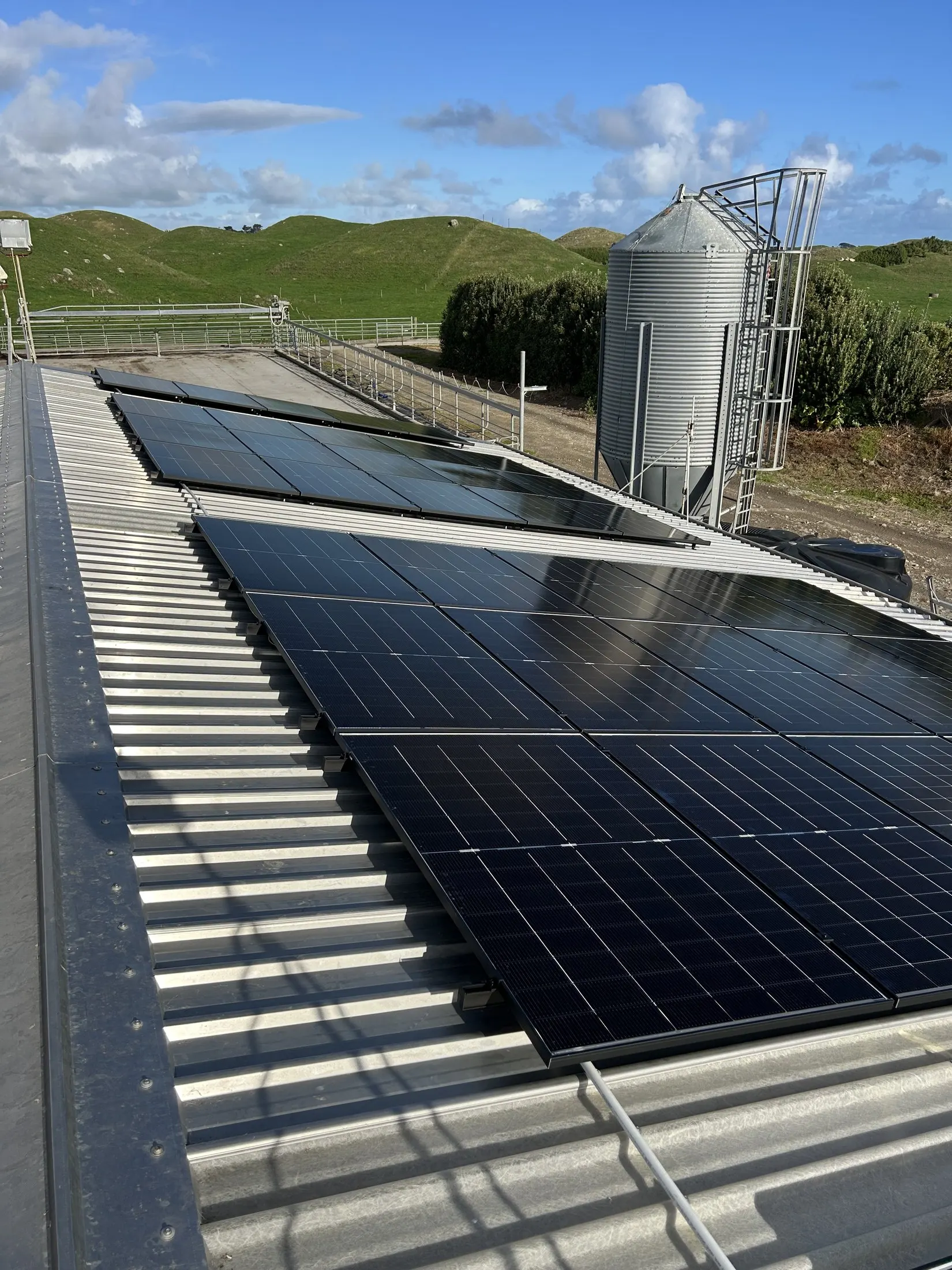
High-efficiency 475 W panels on the dairy shed roof

38 kW

System size

Commercial solar array sized to the farm’s daytime load

51,865 kWh

Est. annual generation

Expected yearly output from the east–west roof

71%

Est. bill reduction

Projected cut in annual electricity costs

THE BRIEF

Making the most of every hour of sunshine

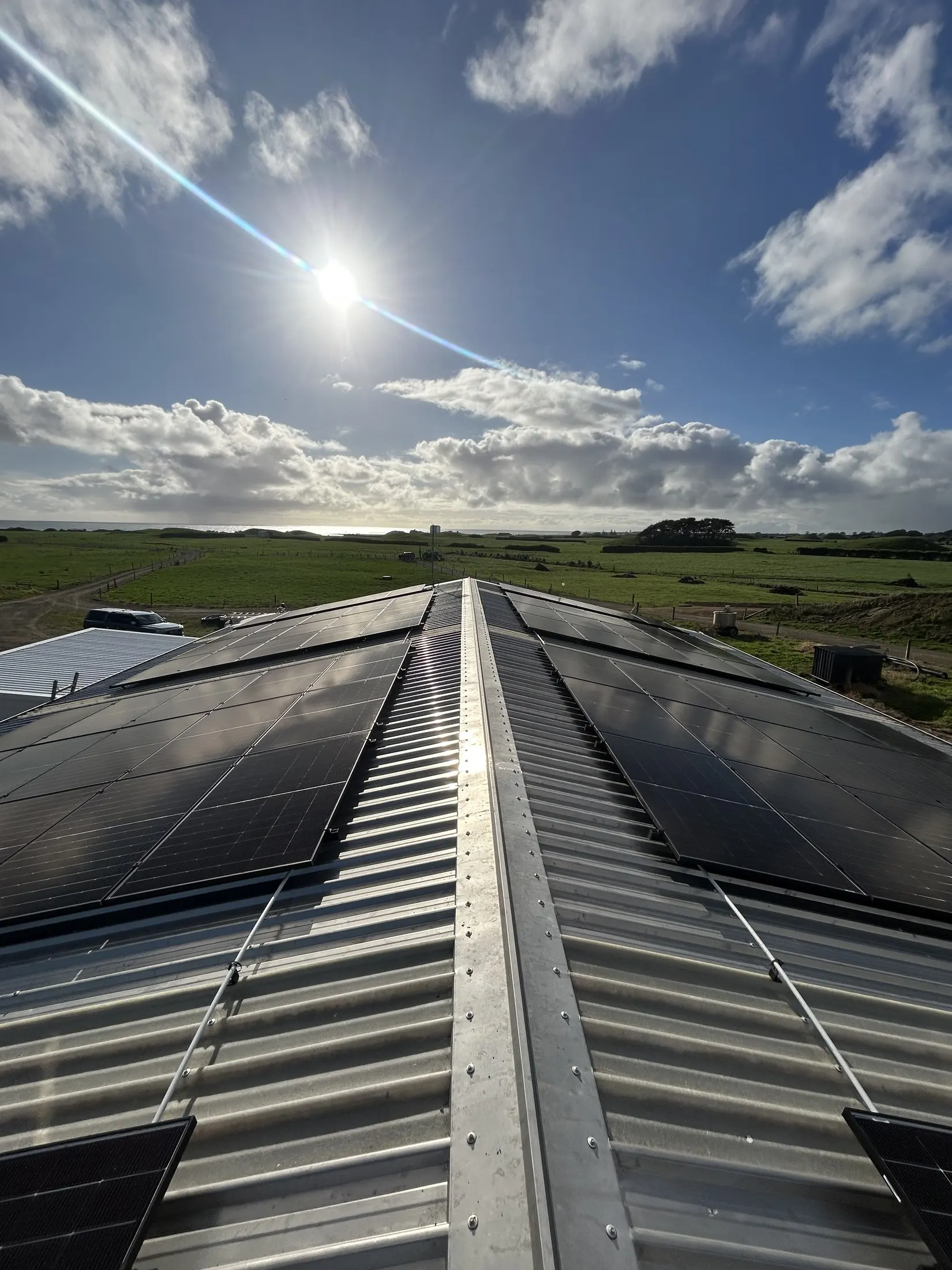
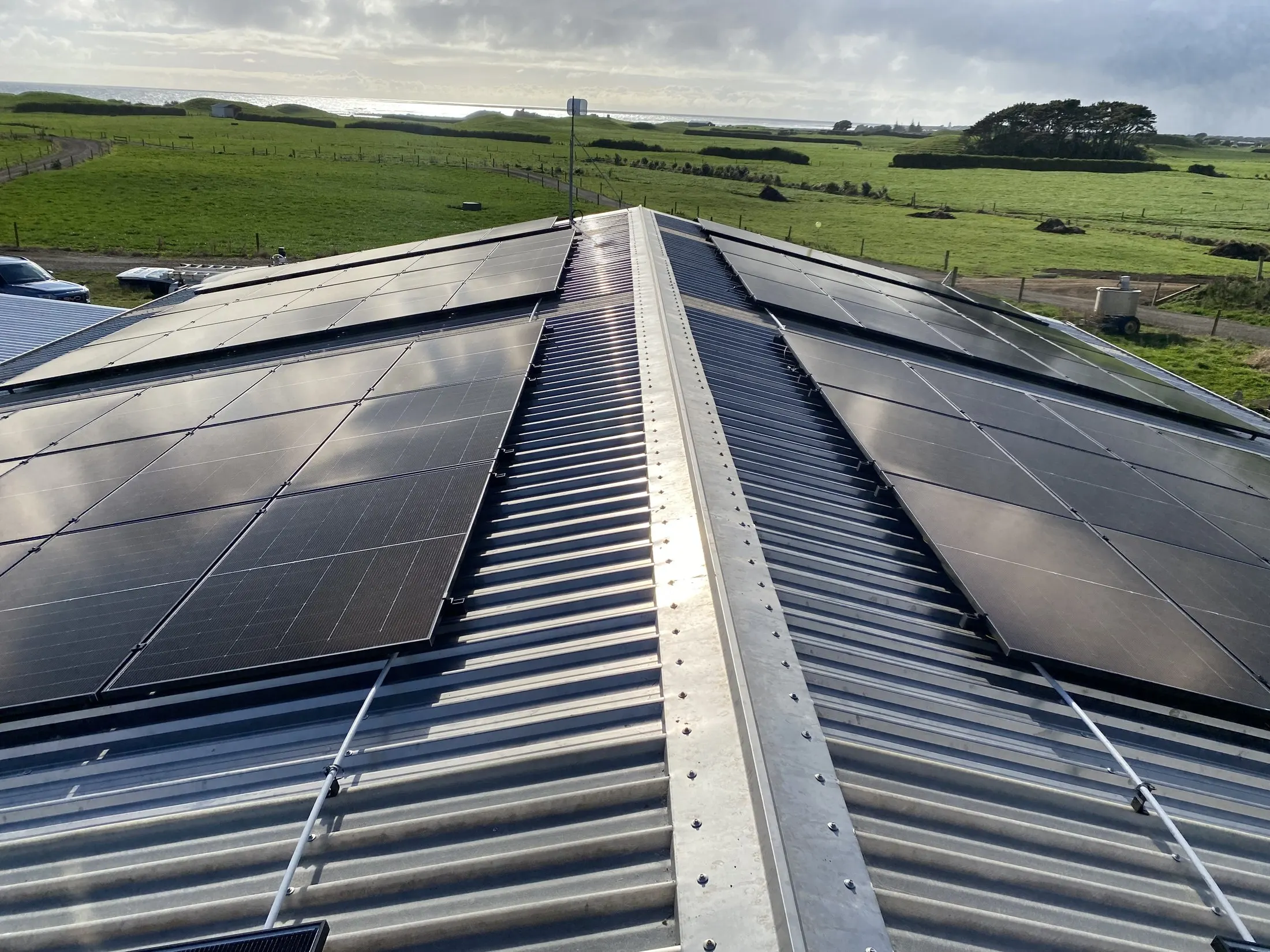
Luke was keen to make the most of the dairy shed's expansive east–west roof, which captures the first morning sun before following it all the way to sunset over the Tasman Sea.

Rather than seeing the roof's orientation as a limitation, we saw an opportunity.

The goal wasn't simply to cover the roof with panels — it was to design a solar system that worked with the way the farm uses electricity, producing strong, consistent generation throughout the day while delivering the best long-term financial return.

Just as importantly, everything had to be built to withstand the wind and salt air that come with farming on the rugged Pungarehu coast.
THE DESIGN

Designed around the dairy

Every Sinclair project starts with understanding how electricity is used — not simply how much roof is available.

By installing 80 high-efficiency 475 W solar panels directly on the dairy shed, the system generates electricity exactly where it's needed most, offsetting refrigeration, water heating, pumps, plant and milking equipment throughout the day.

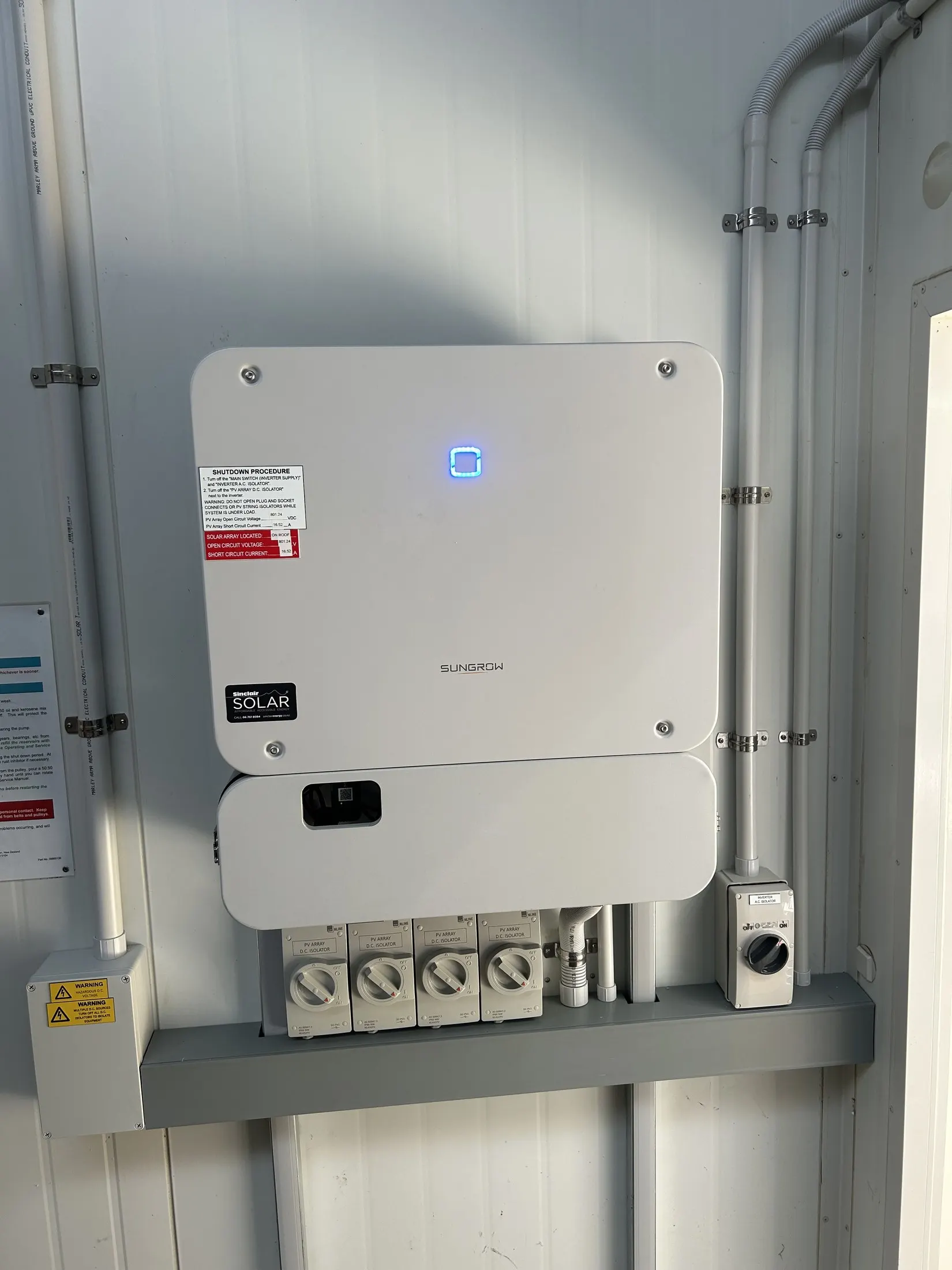
At the heart of the installation is a 30 kW Sungrow three-phase inverter, delivering reliable commercial performance while efficiently converting the energy generated by the solar array into usable power for the dairy's day-to-day operations.

SIZING LOGIC

Why this design?

The question wasn't "How many panels can we fit?" It was "How can we make every hour of sunshine work harder for the farm?"

Luke's large east–west roof gave us an opportunity to capture energy from first light through to the final sunlight over the western horizon.

Instead of chasing a short burst of peak production in the middle of the day, the design spreads solar generation across more of the daylight hours — better matching the way the dairy consumes electricity and increasing the amount of solar energy used on-site.

By generating power exactly where the farm uses it, the system reduces the amount of electricity purchased from the grid while making better use of every hour of sunshine, delivering a stronger long-term return on the investment.

Good solar isn't about fitting the most panels on the roof. It's about designing a system that works with the way the property uses energy.

  • 80 high-efficiency 475 W solar panels
  • 38 kW commercial solar array
  • 30 kW Sungrow three-phase inverter
  • System engineered to maximise on-site energy use throughout the working day
  • Commercial-grade installation designed for long-term performance in coastal conditions
  • Professionally commissioned, tested and monitored for reliable day-to-day operation
Sungrow inverter with Sinclair Solar branding and DC/AC isolators
Sungrow inverter, labelled PV array DC isolators, AC isolator, and shutdown procedure — Sinclair Solar finish.

ON SITE

The installation

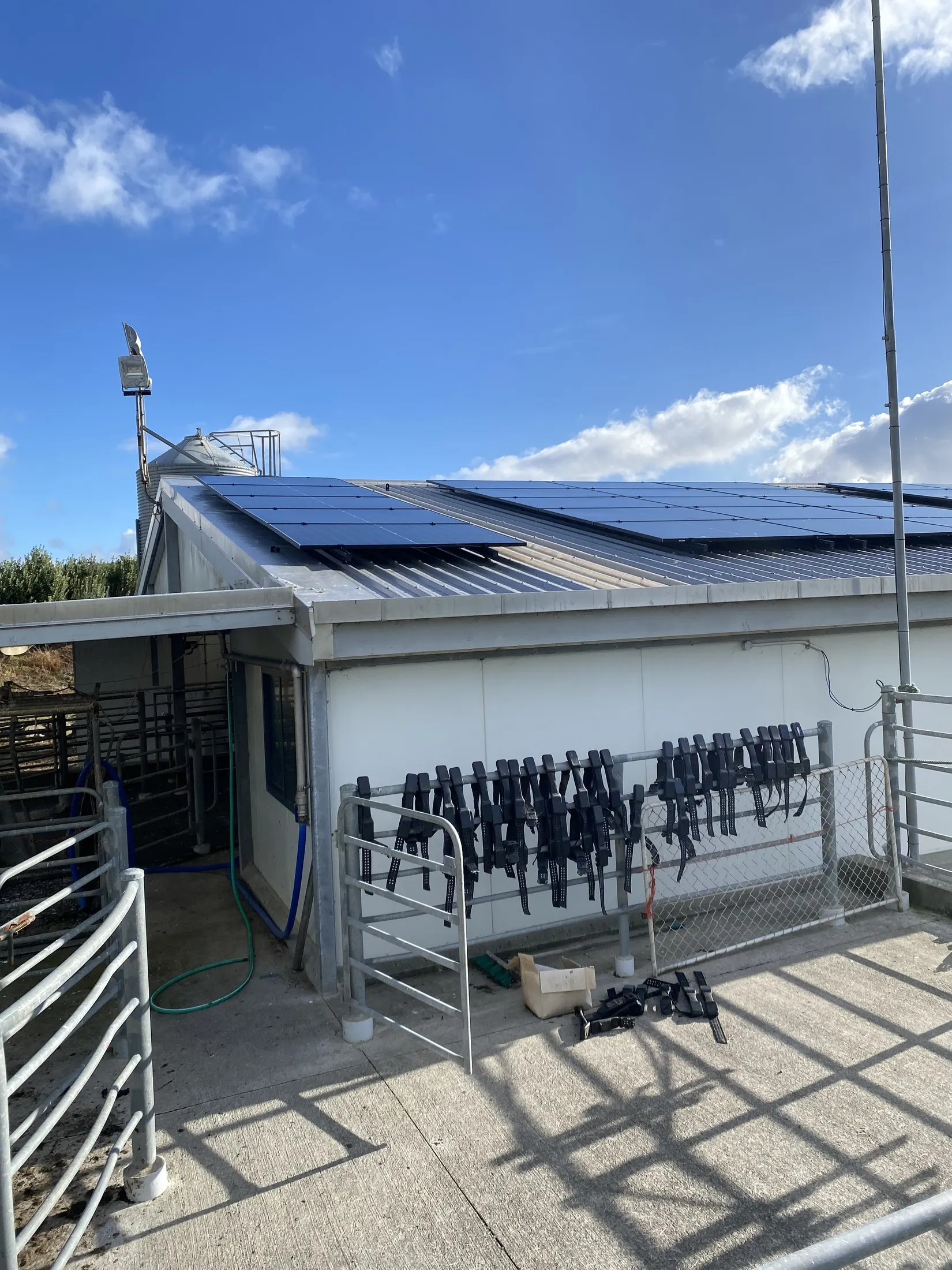
Set against the rugged Pungarehu coastline, the finished installation sits naturally on the dairy shed, quietly generating electricity where the farm needs it most.

Every detail was completed with long-term reliability and serviceability in mind. From carefully routed cabling and commercial-grade mounting hardware through to the placement of the inverter, the installation has been designed to perform reliably despite years of coastal wind, salt air and demanding farm conditions.

Rather than becoming another piece of equipment to manage, the system simply becomes part of the farm — capturing sunshine throughout the day and reducing the amount of electricity purchased from the grid.

The best installations are the ones you hardly notice — quietly delivering value every single day.

Ridge view of dual-pitch dairy shed solar arrays toward the coast
Arrays on both roof pitches — generation sitting on the shed where milking load already lives.

SITE REALITY

What the site demanded

01

East–west roof profile

Design spreads generation from first light to sunset — matching how the dairy actually uses power.

02

Coastal wind & salt

Pungarehu weather eats weak mounts. Fixings and layout assume Tasman exposure.

03

Live farm operations

Install staged around yard traffic, stock, and plant — not a closed construction site.

PROJECT SNAPSHOT

The numbers, in one place

Spec sheet for the Pungarehu dairy shed solar install — capacity, hardware, and key outcomes.

Location
Pungarehu, Taranaki
Industry
Dairy farm
Solar panels
80
System size
38 kW
Est. annual generation
51,865 kWh
Est. power bill reduction
71%
Inverter
30 kW Sungrow three-phase
Site
Coastal — built for Taranaki

LOOKING AHEAD

The Sinclair take

Every farm is different. Different sheds. Different operating hours. Different electricity use. That's why every Sinclair project begins the same way — not with panels or inverters, but with understanding how the property uses energy. Only then do we design a system that fits.

The results

The completed system is expected to generate approximately 51,865 kWh of electricity every year, reducing annual electricity costs by around 71%. Based on the farm's historical electricity usage, annual power costs are projected to reduce from approximately $22,500 to around $6,500, delivering almost $16,000 in first-year savings. More importantly, the system gives Luke greater certainty around one of the farm's largest operating costs.

24/7 Emergency Support

Power outage, heat pump failure, or fridge breakdown? Our certified team responds fast — anywhere in Taranaki.

Call 06 761 8084